

Patch Digitizing Border Types: Merrowed vs Heat Cut 2026
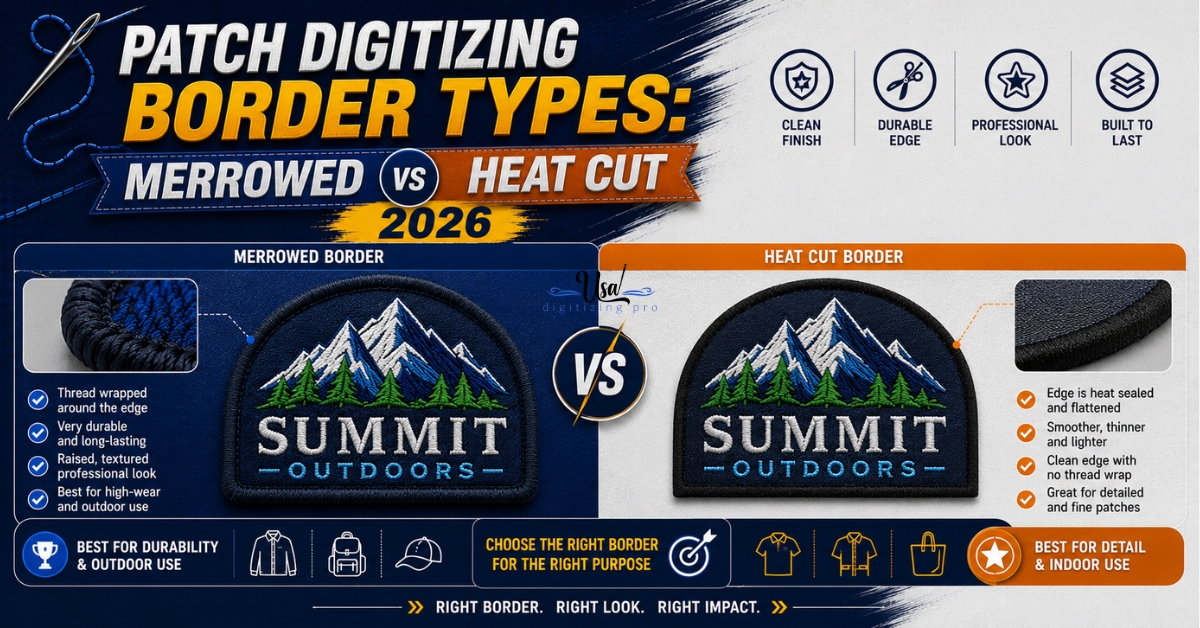
Two identical patch designs can come out looking completely different depending on one decision made before digitizing even starts: how the edge gets finished. Patch digitizing border types, merrowed vs heat cut, aren’t just a cosmetic choice picked after the patch is stitched. Each one requires a different margin, a different file structure, and works better with different design shapes. Pick the wrong one for your artwork and either the border finishing machine cuts into your design, or a complex shape ends up looking clunky in a border style that doesn’t suit it.
Quick Answer at a Glance
What a Merrowed Border Actually Is
Merrowed border: a thick, rounded edge sewn around a patch’s perimeter by a separate overlock machine, after the embroidery itself is finished. Named after the Merrow sewing machine brand traditionally used for this step, it creates a raised, piped look, typically 2 to 3mm thick, that’s become the standard finish for military, first responder, and sports team patches. The digitizing file for a merrow-finished patch doesn’t stitch the border itself. Instead, the designer needs to leave a clear margin, typically 3 to 4mm, between the outermost design elements and the intended cut edge, giving the overlock machine room to work without cutting into the stitching. For the underlying patch construction beyond just the border, the patch chest digitizing overview covers backing material and density decisions that pair with border choice.
What a Heat Cut (Hot Cut) Border Actually Is
Heat cut, sometimes called hot cut or laser cut depending on the specific method, uses a heated blade or laser to cut the patch to its finished shape, sealing the edge as it cuts so the backing material doesn’t fray. Unlike merrow, the border here is thin and flat, generally around 1mm, with no raised pipe. The digitizing file needs a precise border run stitched exactly at the intended cut line, since the cutting equipment follows that line to shape the patch. This method can follow much more intricate outlines than a merrow machine can physically manage.
Why Design Shape Decides Which Border Fits Better
Merrow borders work best on plain, symmetrical shapes without sharp points or tight interior angles, since the overlock machine physically can’t navigate an intricate outline the way a blade or laser can. Circles, rectangles, and simple shields are the classic merrow candidates. Heat cut handles irregular shapes, sharp points, and detailed die-cut outlines that a merrow border would either round off or fail to produce cleanly. If your design has a complex custom outline, that alone often decides the border type before durability or cost even factor in.
Durability: Where Merrow Generally Wins
A merrowed edge tends to hold up better under heavy, repeated handling, which is part of why it’s the standard choice for military and first responder patches that get attached, removed, and reattached constantly on tactical gear. The thicker, piped construction resists fraying more consistently over time than a heat cut edge does, though a well-executed heat cut border on quality backing material still performs reliably for most standard use cases.
Why Heat Cut Handles Detail That Merrow Can’t
This is the tradeoff most comparisons underplay. Heat cut isn’t just a cheaper-looking alternative to merrow. It’s the only practical option once a design has fine points, tight curves, or a genuinely irregular silhouette. A five-point star patch, a state-outline shape, or a brand logo with an unusual custom border all require heat cut or laser cut finishing, since a merrow machine would either fail to follow the shape accurately or round off the details that make the design recognizable in the first place.
Side-by-Side: Merrowed vs Heat Cut
| Factor | Merrowed Border | Heat Cut Border |
| Edge thickness | Thick, piped, 2 to 3mm | Thin, flat, around 1mm |
| Best shapes | Circles, rectangles, simple shields | Intricate, irregular, or sharply pointed outlines |
| Durability under heavy use | Generally higher | Good, slightly lower than merrow |
| Design margin needed in the file | 3 to 4mm clear margin from cut line | Precise border run at the exact cut line |
| Typical cost | Lower | Slightly higher due to precision cutting time |
How the Digitizing File Differs Between the Two
A merrow-bound file needs the digitizer to hold back the design’s outermost elements, leaving that clear 3 to 4mm working margin for the overlock machine. Push the design too close to the intended edge and the merrow stitching can cut directly into the artwork. A heat cut file, by contrast, needs a border run digitized precisely at the cut line itself, since the cutting equipment tracks that line exactly. Getting either margin wrong produces a finished patch that either loses part of the design to the border machine or shows an unfinished raw edge where the cut ran outside the stitched area.
Choosing Between the Two for Your Order
- Look at your design’s outline first. Simple and symmetrical points toward merrow; intricate or irregular points toward heat cut.
- Consider how the patch will be used. Heavy daily tactical use favors merrow’s added durability.
- Ask your digitizer to confirm the correct margin is built in for whichever border type you choose.
- If budget is a primary concern and your shape allows it, merrow is typically the lower-cost route.
- Request a physical sample to confirm the border finish before committing to a full production run.
A Real Order, Broken Down
A veteran-owned apparel brand in Texas ordered a state-outline patch with a small star cutout at one point of the design, originally requesting a merrowed border for cost reasons. The digitizer flagged the issue immediately: a merrow machine can’t follow a state outline’s irregular border or navigate the interior star cutout without losing significant shape accuracy.
The brand switched to a heat cut border instead, with the digitizing file rebuilt to include a precise border run at the state outline’s exact edge, including the star detail. The finished patches held the state shape accurately, something a merrow attempt would have visibly rounded off at every point along the boundary.
Who Builds These Files
USA Digitizing Pro has built patch files for both merrowed and heat cut borders from its Texas studio since 2015, setting the correct margin or border run for whichever finish the design calls for. Standard turnaround runs 2 to 4 hours, with pricing starting at $15 for designs under 5 inches. Every file carries a money-back quality guarantee.
Frequently Asked Questions
Merrowed borders generally hold up better under heavy, repeated handling due to their thicker, piped construction. Heat cut borders still perform reliably for most standard use but tend to show wear slightly sooner under constant attach-and-remove cycles.
Yes, this is exactly where heat cut excels. The heated blade or laser can follow intricate outlines, sharp points, and irregular silhouettes that a merrow overlock machine physically can’t navigate accurately.
The overlock machine that sews the merrow border needs clear space to work without stitching into the design elements themselves. A margin of 3 to 4mm between the artwork and the intended cut line prevents the border machine from cutting into the stitched design.
Merrowed borders are typically the lower-cost option, partly because they suit simpler, more standardized shapes that require less precision cutting time than an intricate heat cut or laser cut outline.
Not without rebuilding the file. The margin and border run requirements differ enough between the two that a file built for merrow won’t have the correct precise cut-line border a heat cut finish needs, and vice versa.
Not directly. Border type affects the edge finish and shape, while attachment method (hook-and-loop, sew-on, iron-on) is a separate backing decision that can pair with either border type.
Circles, rectangles, ovals, and simple shield shapes without sharp interior points or highly irregular edges are the best fit for a merrowed finish.
No. The heat from the blade or laser seals the backing material as it cuts, preventing fraying even though the edge itself is thinner and flatter than a merrowed border.
This is uncommon and generally not practical, since the two finishing methods use different equipment and processes. Most patches use one border type consistently across the full outline.
Look at your outline’s complexity. If it’s a simple geometric shape, either option generally works, with merrow being the more economical choice. If it has fine points, tight curves, or an irregular silhouette, heat cut or laser cut is typically the only reliable option.
Choosing the Right Border for Your Patch
Patch digitizing border types, merrowed vs heat cut, come down to your design’s shape as much as your budget. Merrow suits simple, symmetrical outlines and holds up well under heavy use. Heat cut handles intricate, irregular shapes a merrow machine simply can’t follow. Getting the digitizing margin right for whichever type you choose is what separates a clean finished patch from one that loses detail at the border. USA Digitizing Pro builds files correctly for either finish, starting at $15 for designs under 5 inches.
Follow Us

RELATED BLOGS

Applique Digitizing Stitch Count Reduction: Techniques That Work.
Published August 17, 2026 | By USA Digitizing Pro Team Switching a large design from full embroidery to applique cuts stitch count.
3D Puff Digitizing for Caps vs Jackets: What.
A raised puff logo on a structured cap and the same design on a jacket back look like the same technique from.