
Silhouette Embroidery vs Vector Silhouette Art 2026 Guide
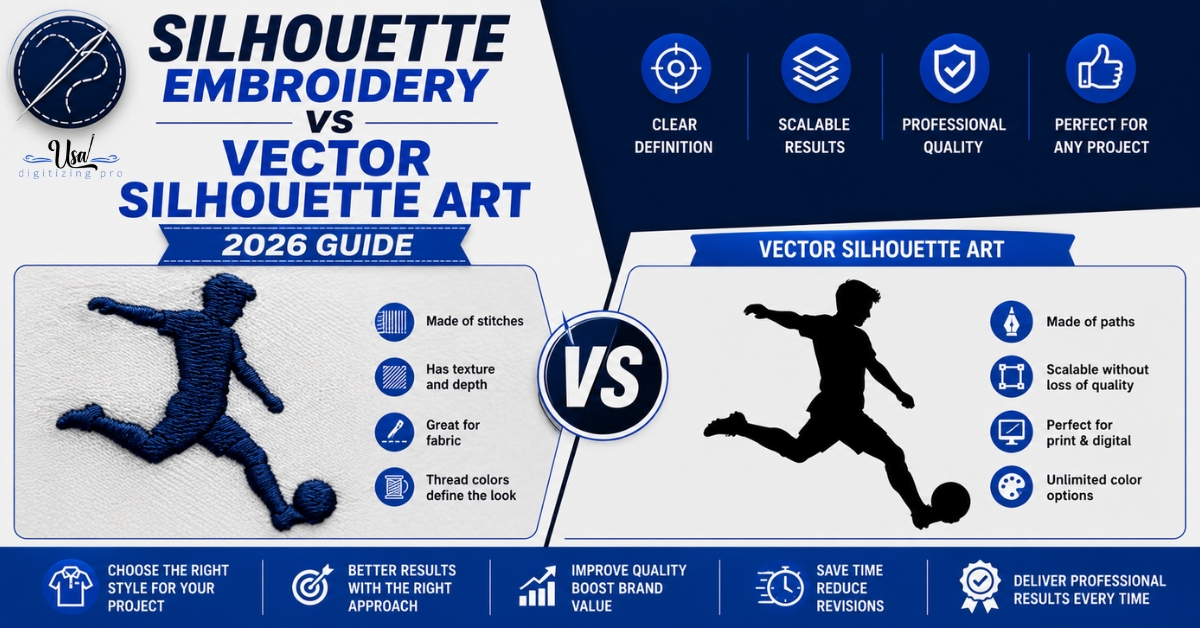
A silhouette design can end up on a garment two very different ways, and picking the wrong one leads to a finished product that doesn’t match what was pictured. Silhouette embroidery vs vector silhouette art is a production-method question as much as a style question. One gets stitched with thread, built from a digitizing file. The other stays as a flat vector graphic, ready for printing, cutting, or digital use without ever touching a needle. Knowing which one an order actually needs avoids paying for the wrong deliverable entirely.
Quick Answer at a Glance
What Silhouette Embroidery Actually Is
Silhouette embroidery: a solid-shape silhouette, often a pet portrait, profile, or object outline, digitized into a stitch file and embroidered directly onto fabric with thread. The digitizing process converts the flat silhouette shape into stitch paths, choosing fill types and densities that hold up on the specific fabric being embroidered. This is a physical, thread-based deliverable meant for garments, patches, or other embroiderable items. For the process behind building these files, the silhouette art services overview covers what goes into a stitched silhouette specifically.
What Vector Silhouette Art Actually Is
Vector silhouette art is a flat graphic built from scalable vector paths rather than thread stitches. It’s meant for printing, cutting with a vinyl cutter, laser engraving, or digital use, not embroidery. Because it’s vector-based, it scales to any size without losing quality, and can hold much finer detail and cleaner edges than an embroidered version of the same shape ever could, since there’s no thread thickness or stitch density limiting the fine points of the design.
Why the Same Image Needs Two Different Files
A customer who wants a pet’s silhouette both embroidered on a jacket and printed on a mug can’t use one file for both. The embroidery version needs stitch paths, fill density choices, and fabric-appropriate settings built specifically for a needle and thread process. The vector version needs clean scalable paths built for print or cutting software. Trying to embroider directly from a vector file, or print directly from a stitch file, produces poor results in both directions.
Detail Level: Where Vector Wins and Embroidery Has Limits
Vector silhouette art can capture fine whiskers, thin tail lines, or sharp small details since it’s just ink or a cut line with no physical thread thickness involved. Embroidery has real physical limits. Thread has thickness, and stitches below a certain size either don’t hold up structurally or blur together into an unreadable blob on the fabric. A digitizer working from a detailed silhouette often needs to simplify the finest details slightly so the embroidered version stitches out cleanly.
Choosing Based on the Final Product
If the silhouette is going on an embroidered garment, patch, or cap, silhouette embroidery is the right service, since that’s what produces a stitch file. If the silhouette is going on a printed shirt, a vinyl decal, a mug, or any flat printed surface, vector silhouette art is the correct deliverable, since it’s built for exactly that kind of reproduction rather than stitching.
Side-by-Side: Silhouette Embroidery vs Vector Silhouette Art
How the Build Process Differs Between the Two
Silhouette embroidery starts with the flat silhouette shape and converts it into stitch paths, choosing fill patterns, underlay, and density suited to the fabric it’s headed for. Vector silhouette art starts with the same flat shape but stays as clean scalable outlines, optimized for how the printing or cutting equipment will reproduce it. Neither process can substitute for the other, which is why a request combining both deliverables needs two separate builds rather than one file doing double duty.
Requesting the Right Deliverable
- Decide the final product first: an embroidered item or a printed or cut item.
- Request silhouette embroidery specifically if the design is going onto fabric via a needle and thread process.
- Request vector silhouette art specifically if the design is going onto a printed or cut surface.
- Ask for both as separate deliverables if the same image needs to appear on both an embroidered item and a printed item.
- Confirm fine detail expectations upfront, since embroidery may need slight simplification versus the vector version.
A Real Order, Broken Down
A pet portrait customer in Texas wanted their dog’s silhouette on an embroidered jacket for themselves and printed on tote bags as gifts for family. The jacket order went through silhouette embroidery digitizing, with the fine tail and ear details slightly simplified so the stitch file would hold up cleanly on the jacket fabric.
The tote bag order used vector silhouette art instead, preserving every fine detail from the original photo reference since printing doesn’t have the same physical stitch limitations. Both deliverables came from the same source photo but required two entirely separate builds to work correctly for their final products.
Who Builds These Files
USA Digitizing Pro has built both silhouette embroidery stitch files and vector silhouette art from its Texas studio since 2015, matching the deliverable to whatever the final product actually needs. Every order is backed by a money-back quality guarantee, with pricing quoted based on the specific request.
Frequently Asked Questions
Not directly. A vector file needs to go through the digitizing process to become a stitch file, since embroidery machines read stitch paths and density settings, not vector outlines.
Vector silhouette art generally preserves finer detail, since it has no physical thread thickness limiting how small a line or point can be.
Yes. Each deliverable is built differently for its specific final product, so a combined request needs two separate builds even from the same source image.
Fine details like thin whiskers or tiny lines often get slightly simplified during digitizing so the stitches hold up structurally and stay readable on fabric.
Yes, that’s one of the core advantages of vector files. They scale up or down freely without the pixelation or quality loss a raster image would show.
No, though pet portraits are a common use case. Any solid-shape silhouette, including profiles, objects, or logos, can be digitized for embroidery.
Yes, vector files are commonly used for laser engraving and vinyl cutting in addition to printing, since the clean scalable paths suit those processes well.
Very fine or intricate details, like thin whiskers or small text within the silhouette, are the most likely candidates for slight simplification once digitized for stitching.
Pricing depends on the specific request and complexity for each service, so it’s best to request a quote for the specific deliverable rather than assuming one costs more than the other.
Yes, a stitch-out reference or preview is typically available so the design can be confirmed before final production.
Choosing the Right Silhouette Deliverable
Silhouette embroidery vs vector silhouette art comes down to what the final product actually is. Embroidered garments and patches need a digitized stitch file. Printed or cut items need a clean vector graphic. The two aren’t interchangeable, and knowing which one your project needs before ordering saves you from paying for the wrong deliverable. USA Digitizing Pro builds both from its Texas studio.

RELATED BLOGS
The Secret Behind Embroidery Design Is Under the.
Published September 21, 2026 | By USA Digitizing Pro Team Ask a decorator why one garment came out clean and the next.
3D Puff Digitizing for Caps vs Jackets: What.
A raised puff logo on a structured cap and the same design on a jacket back look like the same technique from.