
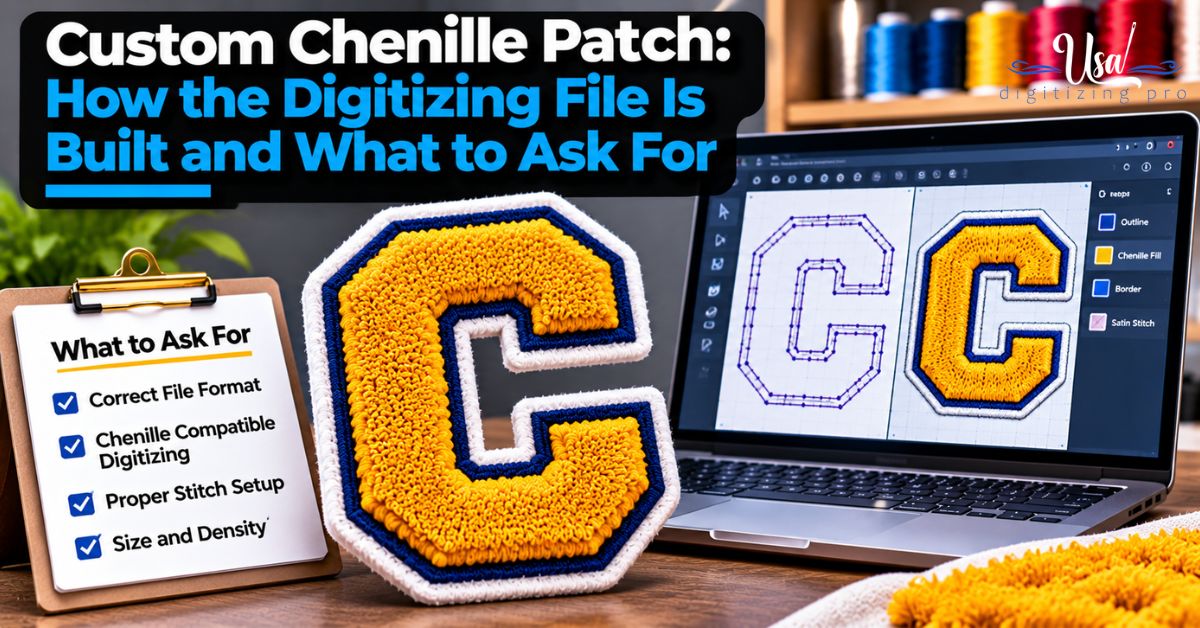
Custom Chenille Patch: How the Digitizing File Is Built and What to Ask For
By USA Digitizing Pro Team | Published November 2026 | Updated November 2026
Few patches are as easy to recognize in America as the fuzzy letter on a letterman jacket. Soft, towel-like texture. Felt underneath. A neat border around the edge. It looks simple. Behind it sits a stitch file that works nothing like normal embroidery. Planning a custom chenille patch for a school, a team or a brand? This post explains how chenille gets stitched, how the file is built, what sizes and materials work and what to send your digitizer. Standard embroidered patches on twill, felt and canvas are covered by our patch digitizing services.
Quick Answer
A custom chenille patch is made with loops of thick yarn stitched onto felt, giving a raised, terry-cloth texture. The file is digitized for a chenille machine using loop (moss) stitches for the fuzzy areas and chain stitches for outlines, often combined with felt layers and standard embroidery details.
| Question | Short answer |
|---|---|
| What is chenille? | Loops of yarn pulled up from felt to make a soft, raised pile |
| Which stitches does it use? | Moss (loop) stitch for fill, chain stitch for outlines and lines |
| What machine runs it? | A chenille or combination chenille and embroidery machine |
| Common base | Felt, often in layers |
| Typical uses | Varsity letters, letterman jackets, mascots, retro patches |
| Can a normal embroidery file run on it? | No. Chenille needs its own file |
Planning a varsity or chenille piece? Email your design to art@usadigitizingpro.com. We’ll tell you whether it suits chenille or works better as a standard embroidered patch.
What Is a Chenille Patch?
It’s a patch where the main area is covered in loops of yarn. The surface feels fuzzy, almost like carpet. Felt is the usual base, with a stitched or cut edge to finish it.
The word is French for “caterpillar.” Touch one and you’ll get it. Varsity and letterman jackets made these patches famous. These days brands put them on hoodies, hats and totes for a retro look.
How Is Chenille Different From Regular Embroidery?
Regular embroidery locks thread into fabric with a needle and a bobbin. Chenille doesn’t use a bobbin thread at all. Instead, a hooked needle pulls loops from one continuous yarn. That single difference changes everything about the file. Stitches are bigger. The yarn is thicker. The machine moves in different patterns. You can’t take a file made for a flat embroidery machine and sew chenille with it.
Which Stitches Are Used in Chenille Files?
Two do almost all of the work. The moss stitch (also called a loop stitch) leaves loops standing up from the felt. That’s the fuzzy pile. It fills the main shapes, like the body of a letter. Chain stitch is flat. It looks like a chain of loops lying down. It’s used for outlines, lines and small text.
Plenty of chenille patches also carry some standard embroidery for fine detail, such as a small year or a satin border. A combination machine handles both parts. The file has to be planned so the two stitch types don’t fight each other.
How Does Chenille Digitizing Work?
Each area gets a loop height, a fill pattern and a direction. Then chain-stitch outlines are added. Felt layers get planned too.
Texture comes from the fill pattern. Spiral, zigzag and circular paths each give the pile a different look. Loop height changes how thick and soft the patch feels in the hand. Order matters as well, since chenille yarn changes are slow. So the machine finishes one color before moving to the next.
Felt layering is common. A letter might sit on one felt color with a contrasting felt border behind it. Where each felt piece goes is marked in the file, along with the cutting line.
What Sizes Work for a Custom Chenille Patch?
Medium and large. Thick yarn and big loops swallow small details. Varsity letters and mascots are usually big, which is exactly where chenille looks its best. Small text inside a chenille patch is normally switched to chain stitch or regular embroidery. Fine lines, tiny words or lots of colors packed tight? A standard embroidered patch may serve you better.
Which Materials and Backings Are Used?
Felt underneath. After that, the patch can get iron-on, sew-on or hook-and-loop backing. Wool or wool-blend felt is the traditional choice for varsity work. Acrylic felt shows up on lower-cost runs. Iron-on is fine for casual use. Sew-on lasts longest on heavy jackets. Hook-and-loop setups are covered in custom Velcro patch digitizing. Edge finishes are compared in patch digitizing border types.
Chenille vs Embroidered Patch: Which Should You Choose?
Texture and vintage feel point to chenille. Detail, small text and a lower price point to embroidery.
| Factor | Chenille patch | Embroidered patch |
|---|---|---|
| Texture | Soft, raised, fuzzy | Flat, smooth thread |
| Detail | Low | High |
| Small text | Done in chain stitch or embroidery | Works well at about 4mm and up |
| Typical size | Medium to large | Small to large |
| Classic use | Varsity letters, mascots | Uniforms, logos, morale patches |
| Machine needed | Chenille or combination machine | Standard embroidery machine |
Want a raised look on a standard machine instead? A 3D puff embroidery patch is another way to get there.
What Should You Send Your Digitizer?
A clear design plus the details that shape the file:
- Artwork in the best format you have (vector is ideal).
- Final patch size in inches.
- Which parts should be chenille and which should be flat or chain stitch.
- Felt colors and the number of felt layers.
- The machine model or file format your producer uses.
- Backing type: sew-on, iron-on or hook-and-loop.
Here’s a typical varsity order. A high school wants block letters for 60 letterman jackets. Each letter gets chenille fill on gold felt with a chain-stitch outline. A navy felt border sits behind it. The class year goes underneath in chain stitch, since it’s too small for loops.
About the Author
USA Digitizing Pro Team. Patch files have been built by hand here since 2015 for US uniform suppliers, schools, teams and brands. Twill, felt and canvas backings come through every week, along with every common border type.
Frequently Asked Questions
A chenille machine pulls yarn loops up through felt to form the pile, then chain stitches add the outlines before the patch is cut and backed.
Yes with heat-seal backing, though patches on heavy wool jackets are usually sewn on as well.
Wash gently in cold water inside out and air dry, since heat can shrink wool felt and weaken iron-on glue.
Usually yes, because it needs special machines, thicker yarn, felt and more setup per patch.
Terry cloth is woven with loops across the whole fabric, while chenille creates loops only inside the digitized shapes.
Yes, combination machines stitch chenille areas and standard embroidery details in one job.
Plan Your Custom Chenille Patch the Right Way
A custom chenille patch needs a file built for loops, chain stitches and felt layers. A standard embroidery file won’t do it. Go with chenille for bold, textured designs. Go with an embroidered patch for detail.
Follow Us

RELATED BLOGS
4×4 Embroidery Hoop: Size Limits and Pricing Guide.
A 4x4 embroidery hoop is the most common hoop size in commercial embroidery and most left chest logos small caps and single.
Logo Digitizing Process: A 2026 Step By Step.
You sent a logo. The shop sent back a polo with thread breaks and fuzzy letters. Sound familiar? Most cap and apparel.