

Modern Hat Machine Embroidery: Methods and File Rules 2026
Published September 21, 2026 | By USA Digitizing Pro Team
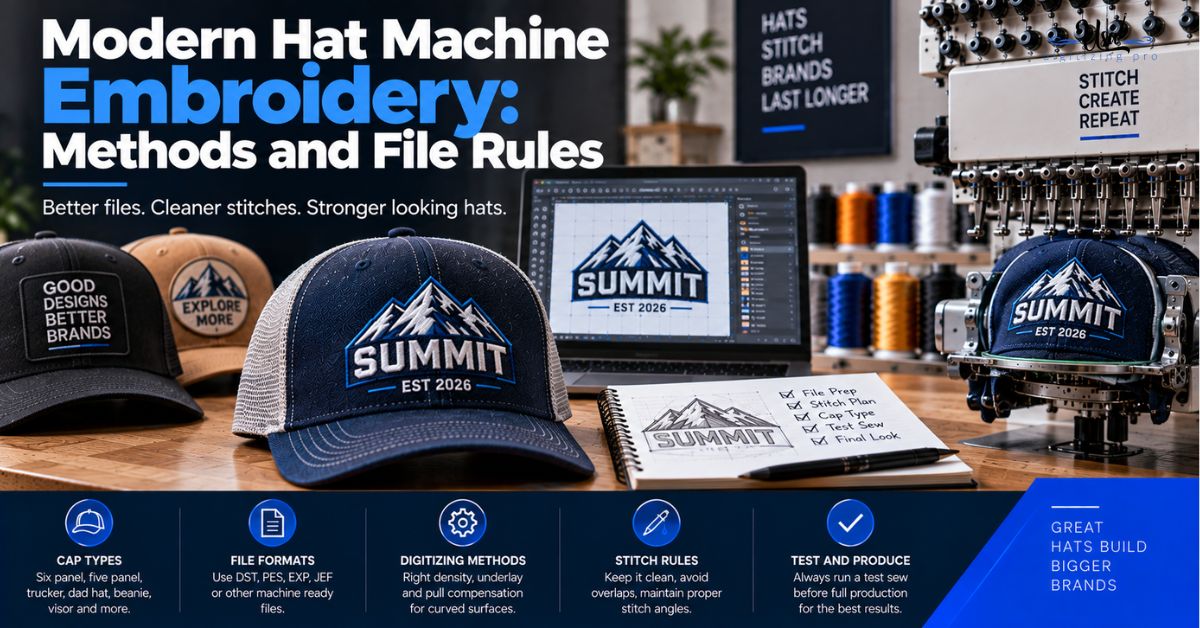
Modern hat machine embroidery no longer means one thing. A cap that would have carried flat stitched lettering a few years ago might now carry a leather patch, tonal thread on thread stitching, raised puff, or two of those together on the same panel. Each one produces a different look, sells at a different price point, and asks something different from the file a decorator runs. Here is the current landscape and the file requirement attached to each.
Quick Answer at a Glance
| Method | The Look | What the File Needs |
|---|---|---|
| Flat direct embroidery | Classic, durable, workhorse | Cap-specific density and underlay |
| Tonal embroidery | Refined, understated, premium | Direction contrast doing the separation work |
| Puff or raised | Bold, dimensional, sporty | Foam paired to column width, no zigzag underlay |
| Leather or applied patch | Artisan, premium, outdoor | A patch file plus a cap tackdown |
| Mixed methods | Layered, retail-grade | Two coordinated files and a sequencing plan |
| Digitizing here | Starting at $15 under 5 inches | 2 to 4 hour turnaround |
What Modern Hat Machine Embroidery Is Competing With
Direct stitching is no longer the default choice it once was, and understanding what took share explains where the market is heading.
Leather and Applied Patches
Patches have moved from a niche option to the fastest growing segment of the US custom hat market, with trend reporting citing demand up roughly forty five percent between 2024 and 2026. Leather specifically carries associations with craftsmanship and premium positioning, and it is commonly finished by debossing, laser engraving, or heat branding, with debossing producing the most subtle and upscale result. the patch digitizing service covers the file side of patch work.
Why Patches Took Share
Patches sell a look that flat stitching cannot produce. A leather patch on a trucker or dad hat signals outdoor lifestyle and artisan sensibility in a way thread does not, and it reads as retail merchandise rather than promotional giveaway. The material does work the embroidery cannot, which is why the growth came from brands trading up rather than from anyone abandoning embroidery.
Where Direct Embroidery Still Wins
Embroidery remains the most popular method of hat decoration, and for reasons that have nothing to do with habit.
Durability Through Daily Wear
Stitched decoration is part of the cap rather than attached to it. There is no bond to fail, no edge to lift, and nothing to separate after repeated wear and washing. For crew caps, uniform programs, and anything worn daily in weather, that difference matters more than the aesthetic argument.
No Separate Application Step
Direct embroidery is one production process. A patch is a made item that then has to be applied, which means either stitching it down or heat applying it, and that is a second step with its own failure points. On volume orders, fewer steps means fewer things that can go wrong across the run.
Tonal Embroidery as the Modern Look
The interesting development is that embroidery answered the premium challenge on its own terms. Tonal or monochromatic stitching, thread close to or matching the cap color, sometimes in a heavier thread weight, produces a refined understated look that reads as expensive precisely because it is quiet. It is the same technique that direction contrast enables, applied deliberately. how stitch direction creates separation without color covers why that works.
The Methods and What Each Needs From the File
This is where the trend discussion becomes practical. Every method above resolves into specific file requirements, and getting them wrong produces the same defects regardless of how current the look is.
Flat Direct Embroidery
The baseline. Density and underlay set for the specific cap construction, sequencing planned center out, and the design sized to the cap front rather than resized from a shirt version. Nothing about this changed with the trends, and it is still where most cap orders live. the cap embroidery area and seam constraints covers the limits every cap design works within.
Tonal or Monochromatic Embroidery
Tonal work removes color contrast entirely, which means the design has to separate through stitch direction, texture, and the slight shadow thread creates. That is a build decision rather than a setting, and a file built for high color contrast will read as an indistinct blob when the colors are pulled close together. Tonal work is harder to digitize well than multicolor work, not easier.
Puff and Raised Embroidery
Raised work adds foam under the stitching, and the file has to pair column width to foam thickness, remove any zigzag underlay from the puff areas, and keep capping density high enough to enclose the foam edge. Elements too narrow to hold foam stay flat within the same design. the puff foam and width pairing guide covers the settings involved.
Applied Patches
A patch is a separate product with its own file. The artwork gets built for the patch itself, including the border treatment that finishes its edge, and then a second, much simpler file handles tacking the finished patch onto the cap. Buyers frequently assume a patch is a single order, and it is generally two pieces of work.
Mixed Decoration on One Cap
The most current development is not any single method, it is brands combining several on one product.
Why Brands Are Layering Methods
Simple flat embroidery is no longer enough for premium positioning, so companies are combining decoration techniques to create layered branding. A leather patch on the front with tonal stitching on the side panel, or puff lettering with flat detail beneath it. Mixing reinforces perceived value and helps a product stand out on a retail shelf rather than in a giveaway bag.
What Mixing Demands
Two or more methods means two or more files, and a sequence that accounts for both. A patch applied before side panel stitching runs creates a different set of production constraints than doing it the other way around, and the design has to be planned so the elements relate visually despite being made by different processes. This is a briefing problem as much as a file problem. what to specify when ordering cap files covers the information that needs to travel with the order.
Blanks Have Changed Too
Method choices only matter alongside what they are being applied to, and the blank market moved at the same time.
Rope Caps
Rope caps moved from golf and outdoor markets into the mainstream and now function as a standard premium canvas. They take embroidery, leather patches, and other patch types comfortably, and the rope detail itself does aesthetic work that means the decoration can afford to be quieter. That pairs naturally with tonal stitching.
Performance and Mesh Panels
Performance fabrics and mesh backs are now standard across a lot of the blank market, and both change what the file and the production setup need. Mesh in particular requires a topper so stitches do not sink into the openings, and performance knits need their own density treatment. the cap troubleshooting guide covers what goes wrong when those are ignored.
Choosing for Your Program
The method should follow what the cap is for, not what is currently fashionable, though on several of these the two now agree.
Decision Checklist
- Decide whether the cap is retail merchandise or a working uniform, since durability priorities differ.
- For daily wear crews, favor direct embroidery with no applied elements to fail.
- For retail and premium positioning, consider a patch or tonal treatment.
- If mixing methods, plan the sequence and budget for more than one file.
- Check the blank, since mesh and performance panels change the file requirements.
- Request a sample on the actual blank before committing to a run.
A Real Order, Broken Down
A Texas coffee roaster ran two cap lines from one logo. Staff caps went flat direct embroidery on structured six panels, chosen because the caps are worn daily through weather and there is nothing applied that can lift. The retail line went to a leather patch on rope caps, with a small tonal mark stitched on the side panel. That required three separate files rather than one: the direct embroidery version, the patch file with its own border treatment, and the tonal side mark built to separate through stitch direction since the thread matched the cap. Same logo, three builds, two very different products, and the retail line sold at roughly double the staff cap cost per unit. what drives cap embroidery pricing covers how method choice affects a quote.
Who Builds These Files
USA Digitizing Pro builds cap, puff, and patch files from its Texas studio, including the tonal and mixed method work current headwear programs are asking for. Pricing starts at $15 for designs under 5 inches, with a 2 to 4 hour turnaround and a money-back quality guarantee. Service details are on the cap digitizing page and the 3D puff digitizing page.
Frequently Asked Questions
Yes. Embroidery remains the most popular method for hat decoration, though patches have grown quickly and premium brands increasingly combine methods rather than choosing one.
US trend reporting puts patch demand up roughly forty five percent between 2024 and 2026. Leather signals craftsmanship and premium positioning in a way thread does not, which suits brands positioning caps as retail products rather than giveaways.
Stitching in thread close to or matching the cap color, sometimes in a heavier thread weight. The design separates through stitch direction and texture rather than color contrast, producing an understated look that reads as premium.
No, harder. Without color contrast doing the work, the separation has to come from stitch direction and texture, which are deliberate build decisions. A file designed for color contrast reads as an indistinct mass when the colors are pulled together.
Generally yes, and usually two pieces of work. The patch itself is built as its own file including its border treatment, and a second simpler file handles tacking the finished patch to the cap.
Direct embroidery, because the decoration is part of the cap rather than attached to it. There is no bond to fail and no edge to lift through repeated wear and washing.
Yes, and premium brands increasingly do. It means two or more files and a production sequence that accounts for both, plus a design planned so the elements relate visually despite different processes.
Not in themselves, since the rope is trim rather than part of the stitching area. They pair well with quieter decoration because the rope detail already does aesthetic work.
More Methods, Same Underlying Rules
Modern hat machine embroidery has more options than it used to, and none of them changed the fundamentals. Density still follows the panel. Sequencing still runs center out. Detail still has to survive roughly two inches of usable height. What changed is that a cap can now be a retail product rather than a giveaway, and the method you pick is largely a decision about which of those you are making.
Follow Us

RELATED BLOGS
Exclusive Embroidery Patterns: What You Really Own in.
Published October 2, 2026 | By USA Digitizing Pro Team Exclusive embroidery patterns are sold on almost every pattern site in the.
Stitching Identity With Hat Machine Embroidery: A Programme.
Published September 11, 2026 | By USA Digitizing Pro Team A branded cap does something no other piece of company apparel manages..