

The Secret Behind Embroidery Design Is Under the Fabric 2026
Published September 21, 2026 | By USA Digitizing Pro Team
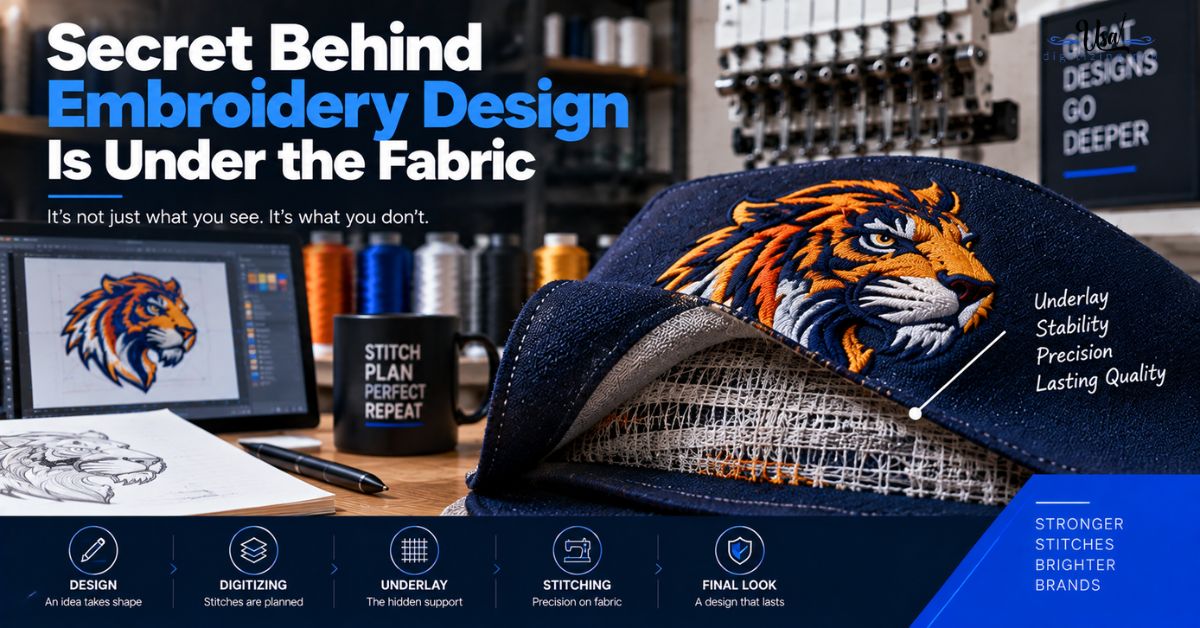
Ask a decorator why one garment came out clean and the next one puckered with the same file on the same machine, and the answer is usually something nobody looked at: what was behind the fabric. The secret behind embroidery design is not a technique anyone is hiding. It is that the backing choice decides more of the visible outcome than most of the design decisions do, and it is the one variable that gets picked by habit rather than by the garment.
Quick Answer at a Glance
| Fabric | Backing Type | Why |
|---|---|---|
| Knits, tees, fleece, anything with give | Cutaway | Permanent support that keeps holding after the run |
| Stable wovens, cotton, canvas, poplin | Tearaway | Enough support during stitching, removed after |
| Sheer or delicate, lace, tulle | Washaway | Dissolves completely so nothing shows through |
| Where washing is not an option | Heataway | Removed with heat rather than water |
| Large or dense designs | Heavier weight | More stitching demands more support |
| Caps and structured panels | Heavier cap backing | The panel and frame both work against the design |
Why the Secret Behind Embroidery Design Is the Backing
This sounds like an overstatement until you look at what backing is doing while the machine runs, and at how often it turns out to be the actual cause of a complaint.
What Stabilizer Actually Does
Stabilizer holds the fabric still while thousands of needle penetrations try to move it. Every stitch pulls the material inward slightly, and without something resisting that, the fabric gathers, distorts, and springs back out of shape once it leaves the hoop. The design did not change. The surface it was stitched onto did.
Why It Gets Blamed on the File
Puckering and distortion look like design faults, so the file gets rebuilt. Sometimes correctly, because density really can be too high. Often the file was fine and the garment simply had no adequate support behind it. The tell is whether the same file behaves differently on different garments, which points at the surface rather than the stitches. the bunching diagnostic guide covers the isolation test that separates the two.
The Four Stabilizer Families
Backings are grouped by how they come off after stitching, and that removal method is what determines where each one belongs.
Cutaway
Cutaway is permanent. The excess gets trimmed away after stitching and the rest stays behind the design for the life of the garment, which makes it the most supportive option available. It is the backbone for knits and anything stretchy, because those fabrics keep moving long after the run finishes and need support that does not leave with the hoop. Softer cutaway grades exist specifically to reduce irritation against skin.
Tearaway
Tearaway is the economical choice, made from low density short fibers so it separates cleanly along the stitch line. It supports the fabric during stitching and then leaves. That works on stable wovens that were not going to move much anyway, including cotton, linen, canvas, poplin, and broadcloth. It does not work on knits, because once it tears away there is nothing left holding anything.
Washaway
Washaway dissolves completely in water, leaving nothing at all. That makes it the answer for sheer fabrics where any backing would show through, for lace, and for freestanding designs where the stabilizer is holding the piece together during stitching and is meant to disappear entirely afterward.
Heataway
Heataway does the same job as washaway but removes with heat rather than water, which suits materials that should not get wet. It is the least commonly used of the four in general garment decoration and the right answer in the specific cases where washing is off the table.
Matching Backing to Fabric
The fabric decides the family. This is the single highest value decision in the whole process and it takes about two seconds once you know the rule.
Knits and Stretch Fabrics
T-shirts, polos, sweatshirts, fleece, and performance fabrics all move. Cutaway is the answer, and using tearaway on them is probably the most common production mistake in the trade. The symptom appears after the garment is unhooped or after the first wash, when the fabric relaxes and takes the design with it. the polo versus woven file comparison covers what else changes on knit garments.
Stable Wovens
Cotton shirting, canvas, twill, denim, and similar materials hold their own shape reasonably well, so tearaway is usually sufficient and quicker to finish. Heavier or denser designs on these fabrics still benefit from cutaway, since the design load matters as much as the fabric behavior.
Delicate and Sheer Fabrics
Silk, tulle, organza, and anything the light passes through need washaway, because a backing that stays behind is visible from the front. This is the category where getting it wrong is most obvious, since the mistake is not a distortion but a rectangle of white showing through the garment.
Weight Is the Second Decision
Once the family is settled, weight decides how much support you actually get. This is where the design itself finally enters the equation.
How Weight Is Measured
Stabilizer weight is expressed in ounces, running from light grades around half an ounce to one ounce, through medium around one and a half to two ounces, up to heavier cap backing around two and a half ounces. Most standard embroidery on woven fabric sits in the medium tearaway range. Lighter is not gentler in a useful sense, it is simply less support.
Design Density Drives It Too
The rule industry sources give is direct: the larger and denser the design, the heavier the backing should be. A small light left chest mark and a dense full back design make completely different demands on the same fabric. This is the point where the file and the backing are genuinely linked, because stitch count and density are file decisions that change what the garment needs underneath. how stitch count and density affect production covers the file side of that relationship.
Where the File and the Backing Meet
Neither one rescues the other, and knowing which failures belong to which saves rerunning the wrong fix.
What Backing Cannot Rescue
Heavy backing will not fix density set far too high for the fabric, will not make small text legible below its physical minimum, and will not correct missing pull compensation that leaves gaps between colors. Those are built into the file and travel with it to every garment. the settings behind common digitizing faults covers what only a rebuild changes.
What the File Cannot Rescue
Equally, a perfectly built file cannot hold a knit still with tearaway behind it, and no density setting compensates for backing that is too light for the design load. When the same file runs clean on a woven and puckers on a knit, that is not the file failing. That is the backing choice failing, and the fix costs pennies rather than a rebuild.
Getting Both Right
The whole thing reduces to a short sequence run before the first garment goes on the machine.
Production Checklist
- Identify the fabric first, since it decides the stabilizer family.
- Use cutaway on anything with stretch, without exception.
- Use tearaway on stable wovens unless the design is large or dense.
- Use washaway on sheer fabrics where backing would show through.
- Step the weight up as design size and density increase.
- Test on the actual production garment, then wash the test piece before approving.
A Real Order, Broken Down
A Texas uniform supplier ran the same left chest logo across woven work shirts and knit polos in one batch. The shirts came out clean. Roughly a third of the polos showed gathering around the design, worse after the first wash. The file was sent back twice for density reductions, and the second rebuild made the logo visibly thinner without solving the problem. The actual cause was medium tearaway used on both garments. Switching the polos to cutaway fixed it with the original file. Two rebuild cycles had been spent on a problem that was never in the file. the left chest troubleshooting guide covers the placement-specific version of this same confusion.
Who Builds These Files
USA Digitizing Pro builds files against the specific garment from its Texas studio, which means asking what fabric a design is headed for before setting density and underlay rather than after. Pricing starts at $15 for designs under 5 inches, with a 2 to 4 hour turnaround and a money-back quality guarantee. Service details are on the logo embroidery digitizing page.
Frequently Asked Questions
It holds the fabric still while thousands of needle penetrations pull it inward. Without adequate support the material gathers during stitching and springs out of shape once it leaves the hoop.
Cutaway is permanent, with the excess trimmed and the rest staying behind the design for the life of the garment. Tearaway separates cleanly along the stitch line and leaves, supporting the fabric only during stitching.
Cutaway. Knits keep moving after the run finishes, so they need support that stays. Using tearaway on knits is one of the most common production mistakes in the trade.
On stable wovens such as cotton shirting, linen, canvas, poplin, and broadcloth, where the fabric was not going to move much anyway and the design is not unusually large or dense.
Washaway, because it dissolves completely in water and leaves nothing behind. On sheer fabric, any backing that stays is visible from the front.
Weights run from light grades around half an ounce to one ounce, through medium at roughly one and a half to two ounces, up to heavier cap backing near two and a half ounces. The larger and denser the design, the heavier the backing should be.
No. Density set far too high, illegible small text, and missing pull compensation are built into the file and travel to every garment regardless of what is behind them.
Also no. A well built file cannot hold a knit still with tearaway behind it. If the same file runs clean on a woven and puckers on a knit, the backing is the problem.
Nobody Sees the Part That Decides It
The secret behind embroidery design is unglamorous and cheap. A sheet of backing nobody will ever look at decides whether the work in the file survives contact with the garment. Match the family to the fabric, step the weight up with design size and density, and test on the real garment before the run. Most of the problems that get blamed on digitizing were decided by something costing a few cents that nobody checked.
Follow Us

RELATED BLOGS

How to Separate Colors for Screen Printing: 7.
Published August 17, 2026 | By USA Digitizing Pro Team Separating colors is where a design either becomes printable or becomes a.
Stitching Identity With Hat Machine Embroidery: A Programme.
Published September 11, 2026 | By USA Digitizing Pro Team A branded cap does something no other piece of company apparel manages..