Logo Embroidery Digitizing Services
Logo Embroidery Digitizing Services: Precision Stitch Files for Every Brand
Your logo is your brand. The moment it lands on a cap, polo or jacket, it speaks for your business before a single word is said. But there is a problem most apparel buyers do not see coming: a great logo file does not automatically become great embroidery. That is where logo embroidery digitizing comes in. Without a properly built stitch file, even a sharp vector logo can run badly on a machine threads break, edges look rough and fine details vanish entirely.
USA Digitizing Pro is a Texas-based studio that has been converting logos into production-ready stitch files since 2015. Every file is built by hand no auto-digitizing software shortcuts. If you want your brand to look clean on fabric, see what professional digitizing looks like before you order.
Quick Answer
Here is a snapshot of what logo embroidery digitizing involves and what USA Digitizing Pro delivers:
| Question | Answer |
|---|---|
| What is it? | Converting a logo image into machine-readable stitch instructions (DST, PES, EMB, etc.) |
| Starting price? | $15 for designs under 5" |
| Turnaround time? | 2 to 4 hours standard |
| File formats? | DST, PES, JEF, VIP, VP3, HUS, EMB and more |
| Quality guarantee? | Yes moneyback guarantee on quality issues |
| Auto-digitized? | No 100% manual work by experienced human digitizers |
| Who uses this service? | Apparel brands, decorators, print shops, promotional companies across the USA |
What Logo Embroidery Digitizing Actually Is
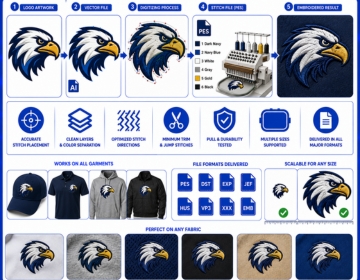
A logo in JPEG, PNG or PDF form is just pixels or vectors data that tells a screen what color to display where. An embroidery machine does not read colors. It reads coordinates, stitch types, thread paths and timing instructions. Digitizing is the act of translating a visual design into that language.
A digitizer maps out every section of the logo and decides what stitch type works here (satin, fill, run), what direction the stitches travel, where the machine needs to jump or trim and how many stitches a given area requires. Get those decisions wrong and the machine produces bunched thread, puckered fabric or a design that looks nothing like the original.
This is why the logo digitizing process matters so much. Automated software guesses at these decisions. A skilled human digitizer reads the design, understands the garment and maps a path the machine can follow cleanly.
Why Your Logo File Cannot Go Straight to the Machine
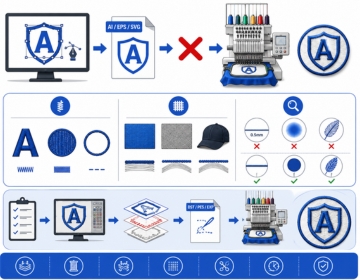
Many customers assume a clean vector file is production ready. It is not. Here's what makes logo digitizing different from standard print or cut workflows:
Stitch Type Selection
Different parts of a logo need different stitch types. Text runs best as satin stitches at small sizes. Large flat areas use fill stitches. Outlines and borders use run stitches. Mixing these correctly is what separates a file that sews cleanly from one that does not.
Fabric Behavior
Fabric stretches. A design set up for a flat woven shirt will behave differently on a knit polo or a structured cap. Pull compensation, underlay stitches and density settings all change based on the material. A digitizer builds these adjustments into the file so the design holds its shape after sewing.
Detail Limits
Embroidery has a physical minimum. Thread has thickness. A 0.5mm line in a vector file can not become a stitch it simply won't register at that scale. Fine gradients and complex shadows rarely translate stitch-for-stitch. A professional digitizer simplifies and adapts these elements so the final result looks right even where the original design can not be reproduced exactly.
For a deeper look at how stitches are chosen, read about how to choose embroidery stitches to understand the technical decisions behind every file.
The USA Digitizing Pro Process: From File to Stitch-Ready
Every order at USA Digitizing Pro follows the same structured workflow. Here's how a logo goes from raw artwork to a file your machine can run without errors:
- Send your logo file (JPEG, PNG, PDF, AI or EPS) along with the target size and placement location (cap, left chest, sleeve, etc.).
- The team reviews the design for stitch-readiness checking for fine details that need simplification, color count and any flags.
- An experienced human digitizer builds the stitch file by hand. No auto-digitizing tools are used at any stage.
- Underlay, pull compensation and density are set for the specific garment type you specified.
- The completed file is reviewed for path logic, trim placement and color sequence before delivery.
- The finished file lands in your inbox within 2 to 4 hours in your requested format.
Rush jobs are handled quickly. Free edits are available if any adjustment is needed after delivery. The contact line is +1 (830) 321-7832 and email orders go to sales@usadigitizingpro.com.
File Formats: What You Get and Why It Matters
Different embroidery machines read different file types. USA Digitizing Pro delivers in any format your machine requires. The most common ones are:
| Format | Machine Brand | Notes |
|---|---|---|
| DST | Tajima, most commercial | Industry standard, widest compatibility |
| PES | Brother | Common for home and semicommercial machines |
| JEF | Janome | Standard for Janome commercial machines |
| VIP / VP3 | Husqvarna Viking, Pfaff | High-end machines, VP3 is newer version |
| HUS | Husqvarna | Older Husqvarna format, still widely used |
| EMB | Wilcom | Editable source format for studios |
If you're unsure which format your machine uses, just mention the machine brand when you place your order. The team will match the file to your equipment.
Logo Placement Options: Where Your Brand Goes
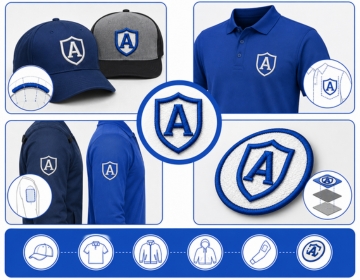
Logo placement changes the digitizing requirements. A cap front panel is curved and works with different stitch density settings than a flat left chest on a polo. Getting placement right is part of what a professionally built file does for you.
Cap and Hat Embroidery
Cap digitizing requires lower stitch density to prevent distortion on curved surfaces. The 3D puff digitizing service is available for logos that need dimensional height on structured caps.
Left Chest
The most common placement for corporate and workwear logos. Typical size runs from 3" to 4" wide. Left chest digitizing needs clean satin text and tight fill density. See specific left chest digitizing guidelines to understand common problems and how file-level decisions prevent them.
Sleeve Placement
Sleeve logos are often smaller and need simpler stitch paths. Left vs right sleeve embroidery covers placement standards and stitch direction for sleeve work.
Patches
Patch digitizing is a different format. The design stitches onto a separate backing material and is cut out afterward. Patch files need a border run and specific density settings for clean edge cutting.
What Makes a Logo Hard to Digitize
Not every logo is equally straightforward. Some designs take more time and more hand work. Knowing what makes a logo complex helps you set the right expectations before you order.
Fine Text and Small Lettering
Text below about 4mm cap height is difficult to stitch cleanly. Thin strokes close together can merge into a blob. A digitizer either simplifies the letterforms or recommends a minimum size for clean output. Forcing tiny text rarely works.
Gradient and Shadow Effects
Embroidery does not produce gradients the way print does. Color shifts are simulated with stitch angle changes and color blending, but the result is always a simplification. Customers with gradient-heavy logos should expect the digitized version to use solid color blocks with strategic shading.
Photo-Based Logos
Logos built from photographs or raster images with complex detail require significant rebuilding before digitizing. In many cases, a vector artwork conversion step comes before digitizing. USA Digitizing Pro handles both in sequence so you do not need a separate vendor.
Very High Stitch Count Designs
Logos with many color changes or large filled areas carry higher stitch counts. More stitches mean longer machine run time and more thread use. A digitizer optimizes paths to reduce unnecessary stitches without losing design quality.
For applique-based logos where stitch count reduction is a priority, applique digitizing is an alternative worth considering.
What a Bad Stitch File Costs You (The Hidden Risk)
Most buyers focus on the price of digitizing. Fewer calculate the real cost of a bad file.
A poorly built stitch file does not just look bad. It causes thread breaks mid-run, which means machine downtime and rehooping. It can distort fabric if underlay is missing or density is set too high. On production runs of 48 or 96 pieces, those problems multiply into rejected goods, rework labor and customer refunds.
The math is plain. A $5 cheaper file that costs three hours of rework labor and 12 rejected pieces on a run of polo shirts is not a saving. It is a loss. This is why production decorators and apparel brands look for files that run clean the first time, every time.
USA Digitizing Pro backs every file with a quality guarantee. If a file does not sew correctly, the team will fix it or refund the order. That's not a marketing promise it is part of how a Texas-based studio built its reputation with USA clients since 2015.
How to Evaluate a Logo Digitizing Service Before You Order
Not all digitizing services are equal. Here's a fast checklist to use when comparing providers:
- Do they confirm 100% manual work or do they use auto-digitizing tools? Automated files frequently miss pull compensation and underlay settings.
- What is the turnaround time for standard and rush orders?
- Do they offer free edits after delivery or charge for every change?
- Can they handle multiple placement types (cap, chest, sleeve, patch) from the same studio?
- Do they deliver in the format your specific machine requires?
- Is there a quality or moneyback guarantee with no hoops to jump through?
- Can you reach a human by phone or email if a problem comes up?
USA Digitizing Pro answers yes to every point on that list. The studio is reachable at +1 (830) 321-7832 and art@usadigitizingpro.com. The physical address is 23531 Baker Hill Drive, Richmond, Texas 77469.
Who Uses Logo Embroidery Digitizing Services
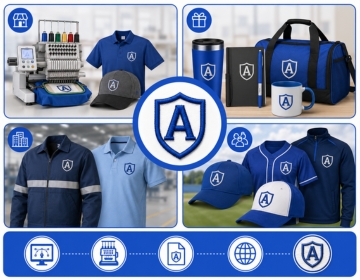
This service isn't limited to one industry. Here's who orders most often:
Apparel Decorators
Screen printers and embroidery shops that take on client work but do not do in-house digitizing use services like USA Digitizing Pro to handle their file prep. Turnaround speed matters here because client jobs can not wait.
Promotional Product Companies
Branded merchandise runs need consistent, repeatable files. A logo that stitches cleanly on 500 caps in January needs to stitch the same way on reorders in July. File quality and format compatibility are critical.
Corporate and Workwear Brands
Companies that source branded uniforms for staff need files that work across multiple garment styles. One logo, multiple placements, multiple fabrics.
Sports Teams and Clubs
Custom logo work for jerseys, caps and jackets. Often smaller orders but high visibility. Clean stitching on a cap logo matters as much as the design itself.
If your brand needs a broader look at custom embroidery work beyond logos, the services overview page covers every placement and decoration type USA Digitizing Pro handles.
Pricing Snapshot and What Affects Your Quote
USA Digitizing Pro starts logo embroidery digitizing at $15 for designs under 5 inches. Most corporate and workwear logos single color or multi color left chest and cap designs land in this range.
Price goes up when designs are complex: high stitch counts, many color changes, photorealistic elements or oversized placements above standard dimensions. The best way to get an exact number is to send the artwork. Quotes are fast, usually included in the initial response within the 2 to 4 hour window.
There are no charges for rush jobs in standard circumstances and no fees for minor edits after delivery. Format conversions are included.
Get Your Logo Digitized the Right Way
Logo embroidery digitizing is the step between your artwork and a finished embroidered product that represents your brand correctly. A file built by USA Digitizing Pro is built by hand, tested for production accuracy and backed by a moneyback quality guarantee. Starting at $15 for standard designs with a 2 to 4 hour turnaround, it is the most direct path from logo to clean stitch.